The process of forming a new Dutch government in the aftermath of far-right firebrand Geert Wilders’ stunning election victory has got under way.
Leaders of political parties met with the chair of parliament’s lower house to appoint a “scout” to investigate possible coalitions.
Mr Wilders’ anti-Islam Party for Freedom, known by its Dutch acronym PVV, won 37 seats in the 150-seat lower house, indicating a seismic shift to the right for the Netherlands.
The party of outgoing Prime Minister Mark Rutte won 24, 10 fewer than in the previous election, according to a near complete count of Wednesday’s votes.
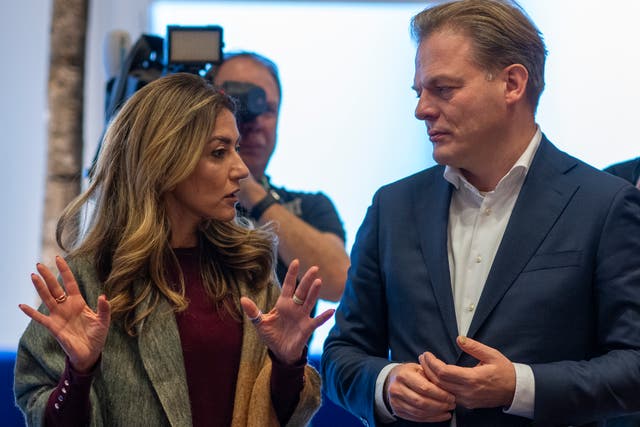
The new leader of Mr Rutte’s People’s Party for Freedom and Democracy, Dilan Yesilgoz-Zegerius, said ahead of Friday’s meeting that the party known as VVD would not formally join a new coalition but might support one in parliament.
Ms Yesilgoz-Zegerius told Dutch broadcaster NOS said that after 13 years of Mr Rutte as prime minister and VVD’s loss of lawmaker seats in the election, “another role is appropriate” for the party.
She added that her party would make “a centre-right coalition possible,” meaning VVD would “support constructive proposals”.
The election result paves the way for Mr Wilders to take the lead in forming a new coalition and potentially to succeed Mr Rutte as prime minister.
However, he will likely have to convince potential coalition partners that he would tone down some of his anti-Islam policies.
His party’s election platform states that the Netherlands “is not an Islamic country. No Islamic schools, Korans and mosques”.
One potential coalition partner for Mr Wilders is the recently formed New Social Contract party, or NSC, which won 20 seats.
The party’s centrist leader, Pieter Omtzigt, said he could not accept “unconstitutional” policies.
Article one of the Constitution of the Netherlands outlaws discrimination “on grounds of religion, belief, political opinion, race, gender, disability, sexual orientation or on any other grounds”.
In an election-night victory speech, Mr Wilders pledged not to push any policies that would breach Dutch law or the constitution.