


Israel bombed targets in overcrowded Rafah early on Friday, hours after US officials warned Israel against expanding its Gaza ground offensive to the southern city where more than half of the territory’s 2.3 million people have sought refuge.
Airstrikes overnight and into Friday hit two residential buildings in Rafah, killing eight Palestinians, and a third strike targeted a kindergarten-turned-shelter for the displaced in central Gaza, killing at least four people, according to hospital officials and AP journalists who saw bodies arriving at hospitals.
The airstrikes came hours after US President Joe Biden said he considers Israel’s conduct of the war to be “over the top”.
The US secretary of state, Antony Blinken, left Israel on Thursday as the divide grows between the two close allies on the way forward.
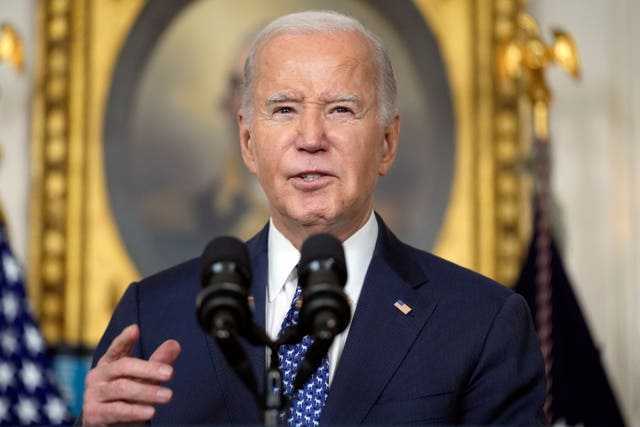
“I am of the view, as you know, that the conduct of the response in the Gaza Strip has been over the top,” Mr Biden said after delivering remarks on a special counsel report on his handling of classified documents.
Mr Biden added that he continues to push for an extended pause in fighting in Gaza to facilitate the release of the dozens of remaining hostages that were captured during Hamas’s October 7 attack on Israel.
Hamas, however, has demanded that Israel release hundreds of Palestinian prisoners and end the war as part of a hostage deal. Israeli Prime Minister Benjamin Netanyahu has refused to agree to those terms.
But Mr Biden said he still is hopeful a deal can be worked out that might open a path to ending the war.
“I am pushing very hard now to deal with this hostage ceasefire,” Mr Biden said.
“I’ve been working tirelessly on this deal. How can I say this without revealing … to lead to a sustained pause in the fighting in, and the actions taking place, in the Gaza Strip.”
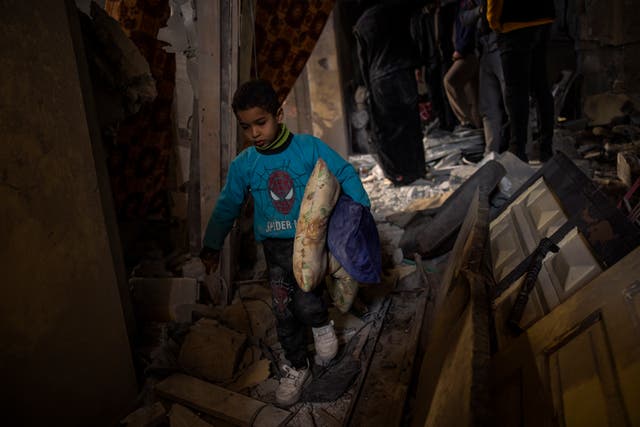
More than half of Gaza’s 2.3 million population has been driven by Israel’s military offensive towards the border with Egypt. Unable to leave the tiny Palestinian territory, many are living in makeshift tent camps or overflowing UN-run shelters.
Israel’s stated intentions to expand its ground offensive to Rafah also prompted an unusual public backlash in Washington.
“We have yet to see any evidence of serious planning for such an operation,” Vedant Patel, a State Department spokesman, said. Going ahead with such an offensive now, “with no planning and little thought in an area where there is sheltering of a million people would be a disaster”.
John Kirby, the US National Security Council spokesperson, said an Israel ground offensive in Rafah is “not something we would support”.
The comments signalled intensifying US friction with Mr Netanyahu, who pushed a message of “total victory” in the war this week, at a time when US secretary of state Antony Blinken was in Israel to press for a ceasefire deal in exchange for the release of dozens of Hamas-held hostages.
With the war now in its fifth month, Israeli ground forces are focusing on the city of Khan Younis, just north of Rafah, but Mr Netanyahu had repeatedly said Rafah would be next, creating panic among hundreds of thousands of displaced people.
Mr Netanyahu’s words also alarmed Egypt which has said that any ground operation in the Rafah area or mass displacement across the border would undermine its 40-year-old peace treaty with Israel.
The mostly sealed Gaza-Egypt border is also the main entry point for humanitarian aid.
The Palestinian death toll from the war has surpassed 27,840 people, the Hamas-run Health Ministry in Gaza said.
The war began with Hamas’s October 7 assault into Israel, in which militants killed some 1,200 people, mostly civilians, and abducted around 250. Hamas is still holding more than 130 hostages, but around 30 of them are believed to be dead.


