Russian missiles have targeted Ukraine’s two biggest cities, damaging apartment buildings and killing at least six people after Moscow shunned any deal to end the almost two-year war backed by Kyiv and its western allies.
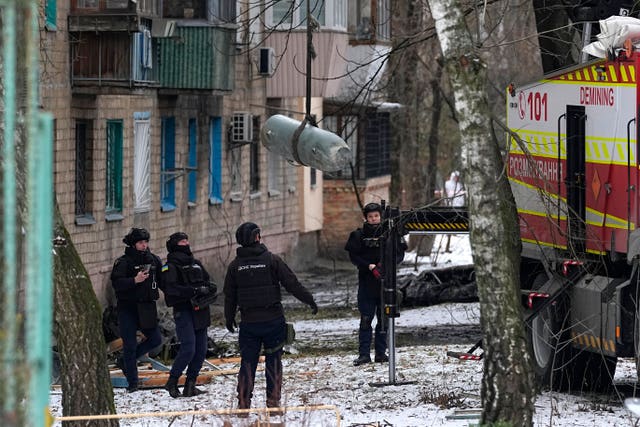
The Russian barrage included more than 40 ballistic, cruise, anti-aircraft and guided missiles, officials said.
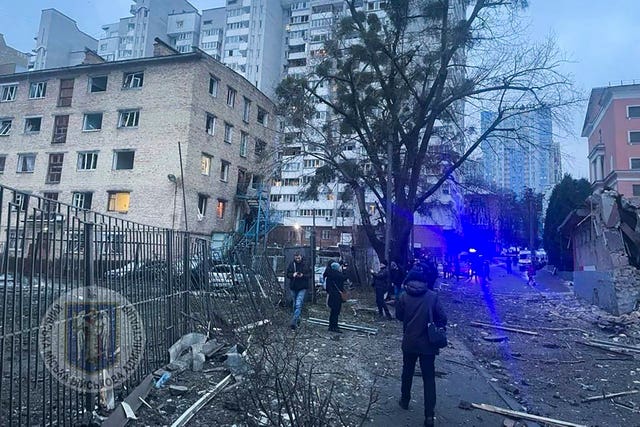
It injured at least 20 people in four districts of Kyiv, the capital, including a 13-year-old boy, according to Mayor Vitalii Klitschko.
In Kharkiv, in northeast Ukraine, the attacks injured 42 people as the missiles damaged around 30 residential buildings and shattered nearly a thousand apartment windows in icy weather, regional governor Oleh Syniehubov said.
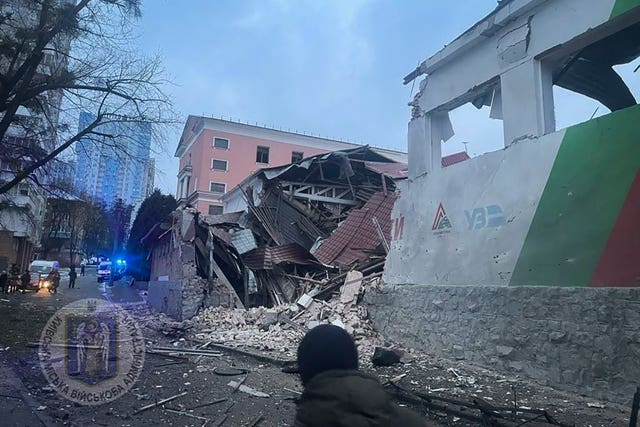
Kharkiv mayor Ihor Terekhov said the temperature in the city was minus 7C (19F).
An entire section of a multi-storey residential building was destroyed, trapping an unknown number of people, Mr Terekhov said.
Lying about 18 miles (30km) from the border with Russia, Kharkiv has often felt the brunt of Russia’s winter campaign of long-range strikes that commonly hit civilian areas.
The attacks keep Ukrainians on edge while the 930mile (1,500km) front line has barely budged. Both sides’ inability to deliver a knockout punch on the battlefield has pushed the fighting towards trench and artillery warfare.
Analysts say the Kremlin’s forces stockpiled missiles at the end of last year to press a winter campaign of aerial bombardment.
There appeared to be scant chance of an end to the war any time soon. Russia’s foreign minister defied the United States and other Ukraine supporters at a UN meeting on Monday, ruling out any peace plan they support.
Sergei Lavrov, Russia’s top diplomat, claimed that Ukrainian forces had been “a complete failure” on the battlefield and were “incapable” of defeating Russia.
The attacks on Kyiv and Kharkiv came two days after Moscow-installed officials in eastern Ukraine claimed that Ukrainian shelling had killed 27 people on the outskirts of Russian-occupied Donetsk. Kremlin spokesman Dmitry Peskov called it a “monstrous terrorist act”.
But the Ukrainian military denied it had anything to do with the attack.
The Ukrainian civilian deaths have helped stir international outrage over Russia’s invasion of its neighbour, and Ukrainian officials have pointed to the attacks in their efforts to secure further military aid from the country’s allies.
Polish prime minister Donald Tusk was, on Monday, the latest foreign leader to visit Ukraine and announce a new aid package that includes a loan to buy larger weapons and a commitment to find ways to manufacture them together.
Ukraine’s allies have recently sought to reassure the country that they are committed to its long-term defence amid concerns that western support could be flagging.
British Prime Minister Rishi Sunak and France’s new foreign minister also travelled to Kyiv in the new year.
But the United States, Ukraine’s main supplier, is currently unable to send Ukraine any ammunition or weapons.
While waiting for Congress to pass a budget and potentially approve more money for Ukraine’s fight, the US will be looking to allies to keep bridging the gap.